

Investments in securities involve risks. The content of this website does not constitute investment advice, a recommendation or an invitation to purchase financial instruments.
Investment Products Overview: A Guide to Common Product Types
Investment products can serve different purposes, from long-term wealth building to more structured investing over time. This page explains common product types such as ETFs, funds, bonds, and savings plans, and highlights the main points to check before choosing between them, including goals, time horizon, risk, costs, and key documents.
- Understand the main product types before comparing options.
- Check your goal, time horizon, and need for access.
- Review risks, costs, and product documents carefully.

What Are Investment Products?
Investment products are ways to invest money through a defined financial structure. They can include stocks, bonds, funds, ETFs, and capital-preservation products. They are not one single product type, but a broad category covering different ways to invest in markets, issuers, or pooled portfolios. Each product works differently, can involve different risks and costs, and may suit different goals, time horizons, liquidity needs, and levels of market experience.
 |
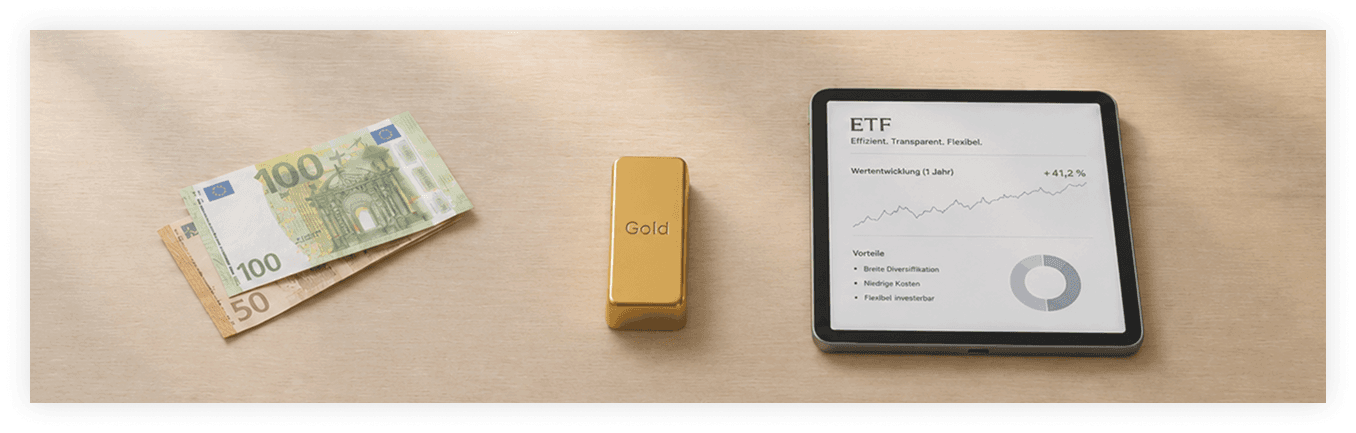
Different products can give access to individual issuers, markets, or pooled portfolios. |
 |
Risk, income, price movements, and costs can vary from one product type to another. |
 |
Product type matters before you compare options, because goals and time horizon shape the review. |
Investment Product Types Explained: ETFs, Funds, and Bonds
Investors can choose from several product categories. Common options include stocks, bonds, funds, ETFs, and lower-volatility capital-preservation products. These categories differ in structure, diversification, risk, liquidity, costs, and the role they may play within a broader financial plan.
ETFs
ETFs are exchange-traded funds that usually track an index or market segment. They are often used to gain broad market exposure through one product. Before comparing ETFs, it helps to understand what they track, how they are traded, which costs apply, and how strongly their price can move.
Market exposure
ETFs can cover broad indices, regions, sectors, or specific market themes.
Transparent structure
Many ETFs follow defined rules, which can make the investment approach easier to review.
Trading and liquidity
ETFs trade on exchanges, but market conditions can still affect the price at the time of buying or selling.
Costs and risks
Ongoing charges, spreads, market risk, and currency exposure may affect the result.
Learn more about What ETFs Are and how they work


Funds
Investment funds pool money across many holdings within one product. They can be actively managed or follow a defined investment approach. Funds are often reviewed when investors want broader diversification without selecting every security individually.
Diversification
Funds can spread exposure across several companies, sectors, regions, or asset classes.
Management style
Some funds are actively managed, while others follow a more rules-based structure.
Product documents
Factsheets, prospectuses, and cost information help explain how the fund works.
Costs and access
Entry costs, ongoing charges, liquidity, and holding period should be checked before investing.
Compare Funds and ETFs.
Bonds
Bonds are debt securities issued by governments, companies, or other institutions. They are usually reviewed by issuer quality, maturity, interest structure, price sensitivity, and liquidity. Bonds can play different roles, but they still involve risks, including issuer risk and interest-rate risk.
Issuer quality
The financial strength of the issuer can affect the level of risk.
Maturity and interest
The repayment date and interest structure influence how the bond is assessed.
Price movements
Bond prices can change, especially when interest rates or issuer expectations change.
Direct access
Some investors buy individual bonds directly, which requires closer review of the product terms.
Learn more about Buying Bonds.

Which Goals Are Often Associated with Investment Products?
Investment products are often considered in relation to a specific financial goal. That goal can influence how long the money may stay invested, how much fluctuation may be acceptable, and whether regular contributions are part of the plan.
Building Wealth Over Time
Many investment products are used to support long-term wealth building through regular investing or gradual capital growth over time.
Planning for Future Expenses
Some investors use investment products to prepare for later financial needs, such as education costs, property plans, or retirement.
Creating Regular Investment Discipline
Investment products can also support a structured approach by helping investors contribute regularly and stay focused on a longer-term plan.
Balancing Growth and Stability
Depending on the product type, investors may look for a balance between growth potential, income, capital preservation, and access to their money.
Investment Products for Different Time Horizons
Time horizon is one of the clearest ways to compare investment products. Products reviewed for money that may be needed sooner often differ from those considered for longer-term goals. The right fit usually depends on access needs, tolerance for fluctuations, and the role of the investment within a broader plan.

Shorter Time Horizons
When money may be needed in the near to medium term, investors often focus first on liquidity and lower volatility. Products often reviewed in this context may include money market funds, short-dated bonds, conservative bond funds, or products designed with a stronger capital-stability focus. These options can still involve risks, including issuer risk, interest-rate risk, liquidity risk, costs, and possible loss.
Longer Time Horizons
For longer-term goals, investors often review products with greater growth potential and stronger price fluctuations. A longer holding period may give more time for market movements to develop, although losses remain possible and are not eliminated. Stocks, diversified funds, ETFs, and regular savings plans are often considered because they can support gradual investing, broader exposure, and asset building over time.

The Triangle of Investing: Security, Liquidity, and Return
When comparing investment products, three factors often come up first: how stable an investment may be, how easily money can be accessed, and what level of return may be possible. These three goals do not usually increase at the same time. A product that is stronger in one area may involve trade-offs in another.
Security
Security refers to how strongly an investment is focused on preserving capital and limiting fluctuations. Products seen as more security-oriented may offer more stability, but they can still involve risk and do not remove the possibility of loss.
Liquidity
Liquidity describes how easily an investment can be sold or converted into cash. Higher liquidity can support flexibility, especially when money may be needed earlier than planned, but market conditions can still affect the price at the time of sale.
Return
Return refers to the potential income or value growth an investment may generate over time. Products with higher return potential often involve greater uncertainty, stronger price movements, or a longer time horizon.

What to Check Before Choosing an Investment Product
Once you know which investment products exist and how they can be accessed, the next step is to narrow them down. A practical review often starts with your goal, time horizon, and tolerance for fluctuations, then moves to costs, documents, liquidity, and the role of the product within your broader holdings.
A careful review often includes:
 What your goal and planned time horizon are
 How much fluctuation you can accept
 How costs and fees may affect the result
 What the product holds and how it is built
 How easily you may need access to the money
 Whether professional advice can help classify the options
Risks to Review with Investment Products
Investment products can differ in structure, market exposure, and price behaviour. Before choosing between them, it helps to look at the main risk areas first. That includes the chance of loss, the size of price movements, how easy it is to sell, and whether costs or currency exposure may affect the result.
 |
Market and Price Risk Many investment products can rise or fall in value. The level of fluctuation often depends on the asset class, region, sector, and time horizon. This risk should be reviewed before comparing possible return. |
 |
Issuer and Structure Risk Some products depend more directly on the strength of one issuer, while others spread exposure across many holdings. Product structure can affect how concentrated or diversified the risk is. |
 |
Liquidity, Currency, and Cost Risk Access, exchange-rate movements, and ongoing charges can also affect the result. These points may matter more over time, especially when products are held for longer periods. |
How Investment Products Can Work Together in a Portfolio
A portfolio does not have to rely on one type of investment product alone. Stocks, bonds, funds, and ETFs can play different roles depending on your goal, time horizon, and tolerance for fluctuation. Some products may be reviewed for growth, others for income, liquidity, or broader diversification. Looking at how they work together can be more useful than assessing each product on its own.
Which Costs and Fees Can Affect the Result
Costs can influence the result just as much as product choice. Depending on the investment product and provider, different charges may apply before, during, and when selling an investment.
Transaction and Entry Costs
These are fees that may apply when buying or entering an investment. They can include order fees, issue surcharges, or other purchase-related costs, depending on the product and provider.
Ongoing Product Costs
These are recurring charges built into the product. They may affect the result over time and should be reviewed before comparing investment products.
Custody or Account Fees
These are charges for holding or managing investments in an account or custody structure. They can vary depending on the provider and service model.
Spreads, Taxes, and Indirect Costs
Some costs are less visible at first glance. Spreads, taxes, and indirect charges can also affect the final result when buying, holding, or selling an investment. Tax implications depend on individual circumstances and may change in the future.
Which Documents You Should Read Before Investing
The documents available can vary by product and provider, but a short document check can make comparisons clearer. Before investing, it often helps to review how the product works, what it costs, and which risks and conditions apply.




Common Mistakes When Selecting Investment Products
Investment products can look similar at first glance, but differences in risk, access, costs, and structure can matter over time. A clear review can help you avoid comparing products too quickly or focusing on one factor alone.
 |
Focusing Only on Return Looking only at potential return can hide other factors such as risk, liquidity, costs, and how strongly the product price may fluctuate. |
 |
Ignoring Time Horizon An investment product should be reviewed in the context of when the money may be needed. A mismatch can make later choices harder. |
 |
Overlooking Costs and Fees Small charges can affect the result over time, especially when products are held for longer periods or used in regular investment plans. |
 |
Comparing Products Too Quickly Products that sound similar can still differ in structure, holdings, risk, access, trading, and ongoing product costs. |
 |
Not Reading the Key Documents Product documents often contain details on risks, costs, structure, and conditions. These should be reviewed before investing. |
 |
Missing the Portfolio Context A product may look suitable on its own, but it should also be reviewed in relation to your wider portfolio, goals, and risk tolerance. |
Related Topics
Investment products can be reviewed from different angles. These related pages explain common structures in more detail, including the basic function of ETFs, regular ETF investing, and what to check before buying bonds.
ETFs Explained Simply
ETFs are exchange-traded funds that usually track an index or market segment. This page explains the basic structure, trading, diversification, costs, and risks in clear terms.
| Learn more |  |
ETF Savings Plan
An ETF savings plan allows you to invest a fixed amount regularly into one or more ETFs. This page explains how regular contributions work, what costs may apply, and which risks should be reviewed before starting.
| Learn More | |
Buying Bonds
Bonds are debt securities issued by governments, companies, or other institutions. This page explains what to check before buying bonds, including issuer quality, maturity, interest structure, price risk, and liquidity.
| Learn More | |
Frequently Asked Questions
1. What are investment products?
Investment products are financial structures used to invest money for a specific purpose. They can include stocks, bonds, funds, ETFs, and savings-based investment methods, depending on how the investment is built and accessed.
2. How do I choose between different investment products?
A useful starting point is usually your goal, time horizon, need for access to the money, and tolerance for fluctuations. Costs, product structure, and the role of the investment within your broader portfolio can also affect which options are worth reviewing more closely.
3. Are investment products always risky?
All investment products involve some level of risk, but the type and extent of risk can differ. Depending on the product, this may include market risk, issuer risk, liquidity risk, currency risk, or the possibility of loss.
4. What documents should I read before investing?
Where available, it helps to review the Key Information Document, factsheet or product summary, any more detailed product document, and the provider’s fee schedule or account terms. These documents can help clarify how the product works, what it costs, and which risks apply.
5. What is the difference between direct investing and investing through funds or ETFs?
Direct investing usually means selecting an individual security, such as a stock or bond. Funds and ETFs pool many holdings into one product, which can make diversification easier and change how the investment is reviewed.
Ready to Review Investment Products More Clearly?
If you want to sort through investment products with more structure, a conversation can help you review goals, time horizon, risks, and costs in context. You can ask questions at your own pace and focus on the points that matter most to your situation. No pressure. Use the conversation to narrow options and clarify what to check next.
 | Risk & Legal Notice |
Investments in securities involve risks. The content of this website does not constitute investment advice, a recommendation or an invitation to purchase financial instruments.