

Investments in securities involve risks. The content of this website does not constitute investment advice, a recommendation or an invitation to purchase financial instruments.
ETF Savings Plan Explained: Strategies for Long-Term Investors
A Structured Way to Invest Regularly
An ETF savings plan lets you invest a fixed amount on a recurring schedule and build market exposure step by step. This page explains how the setup works, what typical cost components to check, and which risks matter for long-term investors. Investments involve risk, values can fall, and losses are possible.
What Is an ETF Savings Plan?
An ETF savings plan is a way to invest regularly in an exchange-traded fund (ETF). You set a fixed amount that is invested, for example, monthly. Depending on the provider, other intervals may also be possible.
The purchases are spread over time instead of investing a larger amount all at once. This is often linked to the cost-averaging idea, because purchases are made at different price levels. Over a longer period, reinvested earnings can support the compounding effect. Market risks remain, however, and losses are possible.

When Do People Consider an ETF Savings Plan?
People often consider an ETF savings plan when they want to invest in a long-term, structured way without investing a larger sum all at once. Compared with other Investment Products, the main focus is the regular, automated build-up of market exposure.

Regular Contributions
An ETF savings plan can be suitable for investors who want to build wealth over many years and prefer fixed contributions. Possible intervals and minimum amounts depend on the provider. Goals may include retirement planning or capital accumulation. Since market values fluctuate, the contribution should remain affordable.

Long-Term Effects
Regular investing spreads purchases across different price levels. This is often linked to the cost-averaging idea, but it does not remove risks or guarantee better results. Over a longer period, reinvested distributions can support the compounding effect.
What Are the Advantages of an ETF Savings Plan?
An ETF savings plan can make long-term investing easier to maintain by combining regular contributions with a clear, repeatable process. Market risk remains, and outcomes can vary.
1. Long-Term Wealth Building
Regular investing supports a long horizon, where market participation happens step by step rather than through one single entry point.
2. Reinvestment and Compounding
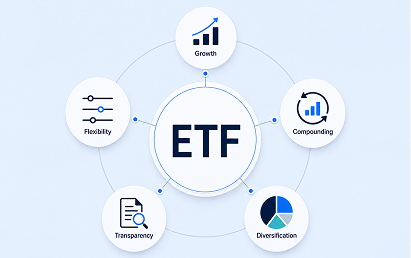
When an ETF reinvests earnings, gains remain invested and can develop over time through the compounding effect, depending on market performance and holding period.
3. Broader Diversification
Many ETFs hold numerous securities. This can reduce dependence on individual issuers compared with holding only a few individual stocks. Broad market declines can still affect the portfolio.
4. Cost Transparency
ETFs often disclose ongoing charges in a standardized way. This can make comparisons easier, but overall costs may also include provider fees and trading-related costs.
5. Contribution Flexibility
Many providers allow contribution amounts to be adjusted, paused, or stopped. Conditions vary by provider and product.

Risks to Understand Before Investing Regularly
An ETF savings plan can be a practical long-term method, but it also has limitations and risks. Most ETFs are designed to track an index rather than outperform it. Your result will typically be close to the index return, but it can be slightly higher or lower due to costs, tracking differences, and trading effects.
A second limitation is strategy concentration. If a savings plan is built only around equity ETFs, the portfolio can be exposed to large market drawdowns. Some investors therefore review whether diversification across asset classes is appropriate for their goals, time horizon, and comfort with fluctuations.
ETF Savings Plan: Choosing an ETF That Fits Your Goal
An ETF savings plan is a contribution method. The ETF you choose defines the exposure and risk profile. A clear goal and a realistic time horizon help narrow the selection. If you want to understand the ETF itself more clearly, learn more about What ETFs Are and how they work.
What to Consider Before You Select an ETF for Your Savings Plan
In practice, ETF selection becomes easier when you start with your objective, your risk tolerance, and how long you can stay invested. The following factors are often reviewed before setting up a plan.
Investment Horizon
Risk Tolerance
Income Preference
Savings Plan and One-Time Investment
Typical ETF Savings Plan Instructions
A savings plan is often easier to maintain when the setup is clear, and the routine stays simple. These steps outline a typical way to structure an ETF savings plan for long-term investing.
Set It Up Step by Step
1. Determine a contribution amount
Review income and expenses and choose a contribution you can maintain. Some investors also keep a cash buffer for unexpected costs before committing regular investing.
2. Open a custody account for ETFs
You typically need a securities account with a bank or broker where ETF units are held, reported, and valued over time.

A common reason people delay investing is overthinking the setup. A straightforward structure with a clear contribution level and a review schedule can be easier to follow than a complex plan that requires frequent changes.
What Does an ETF Savings Plan Cost?
Ongoing ETF Costs
Many ETFs track an index and are often structured with lower ongoing costs than many actively managed funds. A common reference figure is the Total Expense Ratio (TER), which reflects the fund’s ongoing operating costs and is usually deducted within the fund.
Execution Costs
In addition to the ongoing ETF costs, fees may apply for savings plan execution. These vary depending on the bank or broker and may be charged per transaction, as a percentage of the contribution, or temporarily at reduced rates.
Custody and Trading Costs
Depending on the provider, custody fees, buying or selling commissions, and trading-related costs such as the bid-ask spread may apply. To compare the full cost picture, ETF documents and the provider’s price and service schedule should be reviewed.
Frequently Asked Questions
1. What do people use an ETF savings plan for?
An ETF savings plan is commonly used to invest smaller amounts at set intervals over a longer horizon. Outcomes depend on markets, costs, and the ETF chosen.
2. How do people choose a monthly amount?
A common approach is to choose an amount that fits the budget after essential expenses and a cash buffer. The amount is usually linked to time horizons and comfort with fluctuations.
3. Is there a minimum investment amount?
Often yes. Minimums depend on the bank or broker and can range from very small amounts to higher starting levels. Check the provider’s savings plan terms.
4. How risky is an ETF savings plan?
An ETF savings plan is as risky as the underlying investments. Broad ETFs can reduce single-issuer risk through diversification, but market prices can still fall and losses are possible.
5. Can I pause or stop my ETF savings plan?
In many cases, yes. Many providers allow changes to contribution amounts, pauses, or termination. Selling ETF units is usually separate from stopping contributions and depends on account and product terms.
Review ETF Savings Plan with Partner Bank
If you are considering an ETF savings plan, a conversation with Partner Bank’s advisors can help clarify open questions. Together, you can discuss which practical points are important before getting started.

 | Risk & Legal Notice |
Investments in securities involve risks. The content of this website does not constitute investment advice, a recommendation or an invitation to purchase financial instruments.