

Investments in securities involve risks. The content of this website does not constitute investment advice, a recommendation or an invitation to purchase financial instruments.
Funds vs ETFs: When Each Fits
What to Check Before Choosing Funds or ETFs
If you are looking at stock market investments, you will quickly come across ETFs and funds. Both combine many positions in one portfolio, but they differ in management, trading, costs, and transparency. This page explains the main differences, typical advantages and disadvantages, and key documents such as the KID, prospectus, and fee information. Investing involves risks, including possible capital loss.
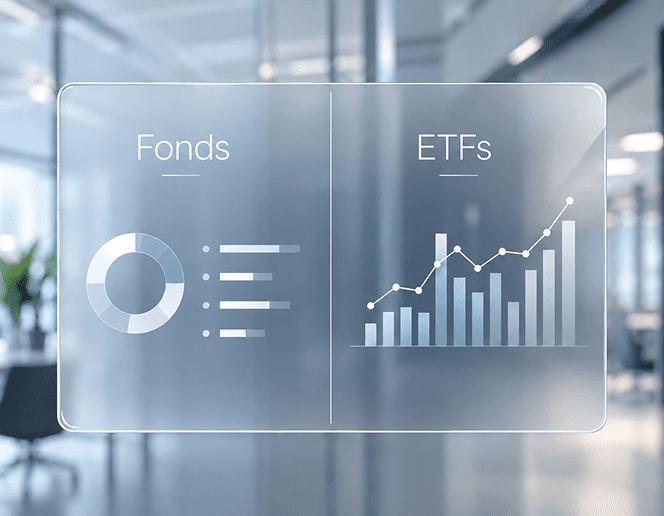
Funds vs ETFs: Common Characteristics
Funds and ETFs belong to the same product family: investment funds. In both cases, you buy shares in a pooled portfolio. While they can help spread exposure across many holdings, diversification does not eliminate market risk and values can fall. If you want to place both options in a broader context, learn more about Investment Products.
Broad Risk Diversification
With funds and ETFs, you typically invest in a portfolio with many securities. Depending on the product, this can increase diversification across companies, asset classes, sectors, and regions.
Long-Term Investing
Funds and ETFs are often used for medium- to long-term goals. They can also serve as building blocks alongside existing positions, for example to broaden an equity portfolio.
Many Investment Themes
Funds and ETFs are available for many strategies and segments, from global markets to specific regions, sectors, or asset classes. Real estate funds or multi-asset funds may also be included.
What Are the Differences Between ETFs and Funds?
Funds and ETFs are both investment funds. They differ mainly in management, trading, costs, and transparency. These points help when reviewing the KID, prospectus, and fee information.

Management Approach
- Funds: A fund team selects positions and adjusts them within a mandate.
- ETFs: Many ETFs follow index rules and track a benchmark as closely as possible.

Trading and Pricing
- Funds: Often traded through the fund company or a platform, usually priced once per day.
- ETFs: Usually traded on exchanges, with prices that can move intraday.

Costs and Fees
- Funds: Often higher ongoing costs due to management, research, and possible additional fees.
- ETFs: Index ETFs often have lower ongoing costs. Trading fees may apply.

Transparency Structure
- Funds: Positions can change between reports. Disclosures are often less frequent.
- ETFs: Index rules can make positions easier to understand. Data is often published more frequently.
Funds vs ETFs: Which Is Better?
There is no single “better” choice in the funds vs ETFs comparison. What fits depends on your goals, time horizon, and how you handle fluctuations. Both funds and ETFs can be used as building blocks in a diversified approach, but they work differently and have different cost and trading features.
ETFs for Rule-Based Investing
ETFs are often used when investors want broad market coverage with clear index rules. Many ETFs track a benchmark, which can make the structure and target market easier to understand. Ongoing costs are often lower for passive ETFs, but trading-related costs such as spreads may apply.
Funds for Active Strategies
Actively managed funds are often used when investors value professional security selection within a mandate. The fund management team can adjust positions and may therefore differ from the benchmark. This approach can involve higher ongoing costs, and results depend on management decisions and implementation.
How to Invest in Funds or ETFs?
If you want to invest in funds or ETFs, there are two common approaches. Which one fits depends on your budget and how you prefer to invest. Values can rise or fall, and losses are possible.

One-Time Investment
A one-time investment means buying fund or ETF units in a single transaction for a fixed amount. This can be suitable if you want to invest a larger amount at once. Some products offer accumulating share classes, where distributions are usually reinvested within the fund. This can increase the number of units held over time. However, results depend on market performance and costs.

Savings Plan
A savings plan means investing a fixed amount regularly, for example monthly or quarterly. This approach can make investing more gradual and help with budget planning. Regular investing spreads entry points across different price levels. It does not remove risk, but it can reduce the effect of investing the full amount at a single point in time.
Funds vs ETFs: Advantages and Disadvantages
| Product | Advantages | Disadvantages |
| Funds |
|
|
| ETFs |
|
|
What Risks Do Funds and ETFs Involve?
Funds and ETFs involve investment risks, and their value can rise or fall. The level and type of risk depend on the assets they hold, the markets and currencies they are exposed to, and how the product is structured or managed. The relevant risks should therefore be reviewed at product level before investing.
ETF Risks
ETFs can be affected by index concentration, currency movements, liquidity, and differences between the ETF price and the value of its underlying assets. Tracking differences may arise from costs or replication methods. Synthetic ETFs may also involve counterparty risk, while narrow sector or regional ETFs can be more exposed to developments in a limited part of the market.


Fund Risks
Investment funds can be affected by the manager’s investment choices, portfolio concentration, currency exposure, and the credit or interest-rate sensitivity of the assets they hold. Some funds may also hold less liquid investments, which can make valuation or redemptions more difficult during stressed markets. The level and type of risk therefore depend strongly on the fund’s strategy and underlying portfolio.
Funds vs ETFs: Which Investment Option Is More Flexible?
Flexibility is mainly about how and when you can buy or sell. ETFs are usually traded on an exchange during trading hours, while many classic funds are processed via the fund company at a daily price. Trading rules and fees can differ by provider and product.
ETFs: Intraday Trading
ETFs are usually traded during stock exchange hours, with prices that can move throughout the day. Depending on the market, liquidity, and order type, spreads and order fees may apply.
Funds: Daily Pricing
Many actively managed funds are bought or sold through the fund company or a platform. Orders are often processed at the next valuation point, depending on cut-off times and settlement rules.
Check Before Choosing
Check cut-off times, pricing, and total costs. For ETFs, spreads and order fees matter. For funds, possible front-end loads and redemption rules should be reviewed in the product documents.
Which Might Be Right for You: ETFs or Funds?
ETFs and funds have different strengths and limits. What matters is your goal, time horizon, cost awareness, and preferred management style. Before comparing products, the KID, prospectus, and fee information should be reviewed.

When ETFs Often Fit
ETFs may fit if you prefer broad diversification, a long-term approach, and a rule-based structure. Many index ETFs follow a clearly defined market. Exchange trading can offer flexibility, but trading costs may apply.

When Funds Often Fit
Funds may fit if you want active selection within a mandate. They can offer access to certain strategies, regions, or themes. Results may differ from the benchmark, and costs can be higher.

When Both Are Combined
Some investors use ETFs as a core holding and add actively managed funds for certain areas. This can open more options, but it also increases complexity. Market risks and costs should still be reviewed.
Frequently Asked Questions
1. Are ETFs and funds the same thing?
An ETF is a type of investment fund. In everyday use, “funds vs ETFs” often means actively managed funds versus passive, index-tracking ETFs. The key differences are usually how the product is managed, how it trades, and what costs apply.
2. Do ETFs always track an index?
Many ETFs are designed to track an index, but not all. Some ETFs are actively managed. The key information document and prospectus explain whether the ETF tracks an index, how it invests, and which risks apply.
3. Why do actively managed funds often cost more?
Active funds typically involve research, portfolio management, and ongoing decisions by a management team. That can increase ongoing product costs, and some funds may also include a sales charge or performance-related fees. Always review the fund’s cost disclosures before comparing options.
4. Can I invest in both ETFs and funds?
Yes. Some investors combine them, for example using an ETF for broad market exposure and adding an actively managed fund for a specific mandate. Whether this is suitable depends on your goals, time horizon, and risk tolerance, and it does not remove market risk.
5. What should I check before choosing between funds and ETFs?
Start by confirming the asset class and risk level, then review the key information document and prospectus. Compare costs, how the product is managed, how it trades, and whether there are additional risks such as currency exposure or synthetic replication.

Discuss Investment Products with Partner Bank
If you are unsure which investment products could fit your goals, time horizon, and risk tolerance, a consultation with Partner Bank’s advisors can help. Together, you can clarify how funds, ETFs, or other products are structured and which points may matter before investing.
 | Risk & Legal Notice |
Investments in securities involve risks. The content of this website does not constitute investment advice, a recommendation or an invitation to purchase financial instruments.