

Investments in securities involve risks. The content of this website does not constitute investment advice, a recommendation or an invitation to purchase financial instruments.
ETF Explained Simply,
A Practical Guide to Understanding ETFs
Learn the Basics of ETFs Before You Invest
If you want to understand ETFs more clearly, start with the structure behind the label. This page explains what an ETF is, how many UCITS ETFs in Europe are set up, what to compare before investing, and which risks can affect returns. You will also see the usual steps before buying, so the topic feels easier to review.
What ETF Means and How It Works
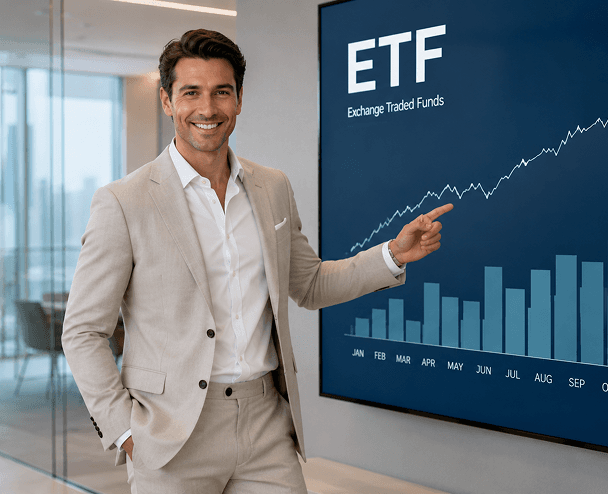
ETF stands for exchange-traded fund. It is a fund that can be bought or sold on an exchange during market hours, and many ETFs are built to follow a specific index. For investors in Europe, many ETFs are offered under the UCITS framework, with standard documents that help you compare structure, costs, and risks. Learn more about how ETFs fit into the wider range of Investment Products.
How ETFs Are Traded
ETFs are bought and sold on an exchange, so their market price can change during the trading day.
What Many ETFs Track
Many ETFs aim to follow an index, such as a share or bond market benchmark, instead of selecting holdings one by one through active management.
What UCITS Means in Europe
Many ETFs available in Europe are structured as UCITS products. This framework includes standard investor documents that can help you review objectives, fees, and risk information more clearly.
Key Points to Review Before Investing in an ETF
Before you invest in an ETF, it helps to review a few practical points first. The fund name may sound simple, but structure, costs, risk, and market exposure can differ from one ETF to another.
 |
What the ETF TracksStart with the index or market the ETF follows. A global equity ETF, a bond ETF, and a sector ETF can behave very differently over time. |
 |
Costs Beyond the Fund FeeThe ongoing charge is only one part of the picture. Trading costs, custody fees, and the spread between buy and sell prices can also affect your result. |
 |
Risk and Price FluctuationETF prices can rise or fall with the market they track. The level of fluctuation may depend on the asset class, region, sector, and currency exposure. |
 |
Fund Structure in EuropeMany ETFs available in Europe are UCITS funds. It also helps to check whether income is paid out or reinvested, and in which currency the ETF is traded. |
 |
How It Fits Your PortfolioAn ETF should be reviewed in the context of your broader holdings, time horizon, and goals. A fund may look diversified on its own but still overlap with investments you already have. |
How to Compare ETFs More Clearly
Two ETFs can appear very similar at first glance, especially when both focus on the same region, sector, or asset class. A closer review often shows differences in what they track, how they follow the market, what they cost, and how easily they trade. Looking at these points early can make the comparison clearer before you focus on past performance or fund names.

A simple comparison can show whether two ETFs only appear similar, or whether they differ in ways that may matter for cost, structure, and day to day price movement.
When you compare ETFs, check:
 | Index and market exposure |
 | Replication method |
 | Ongoing charges and trading costs |
 | Fund size and trading volume |
 | Distribution policy and fund domicile |
 | Currency and risk profile |
Common ETF Risks to Understand
ETFs are often used for broad market access, but they still involve investment risk. Understanding the main risk areas can help you assess whether a specific ETF matches your goals, time horizon, and tolerance for price fluctuation. Even diversified ETFs can fall in value, and losses are possible.
Market Risk Can Affect the Whole ETF
If the market or index an ETF follows falls, the ETF usually falls as well. Broad diversification can spread exposure, but it does not remove general market risk.
Narrow Exposure Can Increase Fluctuation
Sector, regional, thematic, or single-asset-class ETFs can move more sharply than broader funds. A more focused ETF may react more strongly to economic, political, or industry-specific events.
Currency Risk Can Influence Returns
If the ETF holds assets in another currency, exchange-rate movements can affect returns for European investors. This can matter even when the underlying investments perform as expected in their local market.
How to Buy ETFs Step by Step
Clarify Your Goal and Time Horizon
Start by defining what the investment is for, how long the money can stay invested, and how much price fluctuation you could tolerate. This helps narrow down which type of ETF may be relevant.
Open or Review a Securities Custody Account
ETFs are usually bought through a securities custody account. Before investing, it helps to check which markets are available, what custody and trading fees apply, and how buying and selling work in practice.

Where ETFs May Be Useful and What to Weigh Carefully
ETFs are often used because they can make market access more structured and easier to compare. At the same time, they are not automatically simple, low risk, or suitable for every goal. A balanced view can help you understand where ETFs may be useful and what still needs careful review before investing.
Where ETFs May Be Useful
ETFs can play a practical role in long-term investing when the fund, the market exposure, and the overall portfolio fit your objectives. You may use them for diversification, transparency, and access to broad market segments through a single fund.
Broad market access through one fund
What to Weigh Carefully
ETFs can be useful tools, but they do not remove the need to compare structure, cost, and portfolio fit carefully. Before investing, it helps to consider what the ETF actually provides, and where its limits may be.
An ETF does not replace investment planning
Understanding ETFs Is One Step. Applying Them Is Another
Learning what an ETF is, how it works, and what risks it involves is an important starting point. The next step is to look at that knowledge in context. An ETF that appears suitable in general may still differ in relevance depending on your goals, time horizon, liquidity needs, and the investments you already hold.
That is why ETF decisions are often clearer when viewed as part of a broader investment approach rather than in isolation. Looking at portfolio overlap, cost structure, market exposure, and the role of the ETF within your overall plan can help turn general understanding into a more practical assessment.
A structured conversation can help clarify how a specific ETF may fit alongside your objectives, existing holdings, and tolerance for fluctuation.

Frequently Asked Questions
1. What is an ETF?
An ETF, or exchange-traded fund, is a fund that trades on an exchange. Many ETFs are built to follow an index, so one fund can give you exposure to a wider market segment.
2. Are most ETFs in Europe UCITS ETFs?
Many ETFs available to retail investors in Europe are structured under the UCITS framework. Still, it helps to check each product’s factsheet and KID, because structure and features can differ.
3. Can you lose money in an ETF?
Yes. ETF prices can rise or fall with the market, sector, or asset class they track. Diversification can spread exposure, but it does not remove the risk of loss.
4. Are ETFs and investment funds the same thing?
An ETF is one type of investment fund. Many ETFs trade during market hours on an exchange, while some other funds are priced once a day and may be actively managed.
5. What costs should you check before buying an ETF?
Look beyond the ongoing fund charge. Trading costs, custody fees, and the spread between buy and sell prices can also affect your overall result.
6. What is the difference between accumulating and distributing ETFs?
An accumulating ETF reinvests income within the fund. A distributing ETF pays income out, which may suit some investors differently depending on cash-flow needs and portfolio structure.
Want to Review ETFs with a Professional?
ETF selection options should fit your personal situation. In a conversation with a Partner Bank advisor, ETF type, costs, risks, time horizon, and existing investments can be considered together. This can help clarify open questions and calmly review possible next steps.

 | Risk & Legal Notice |
Investments in securities involve risks. The content of this website does not constitute investment advice, a recommendation or an invitation to purchase financial instruments.