

Investments in securities involve risks. The content of this website does not constitute investment advice, a recommendation or an invitation to purchase financial instruments.
Wealth Building for Women: A Clear Introduction to Long-Term Planning
Why Wealth Building Matters for You
Have you ever considered how steady wealth building is discussed in long-term planning? Wealth Building for Women can be approached by reviewing your current situation, understanding basic concepts, and taking small steps over time. This page provides general information and outlines formats available at Partner Bank.

What Matters Most When You Build Your Wealth

Closing Pension Gaps
In many discussions about retirement planning, pension gaps are one topic people review when comparing longer-term planning options.
Understanding Risks
Capital market investments can fluctuate in value and may involve losses. Risk tolerance, time horizon, and personal circumstances should be considered before choosing an approach.
Staying Flexible
Some people use flexible savings accounts or savings plans and adjust contributions as circumstances change. Product availability depends on the provider.
Balancing Growth and Stability
Growth-oriented investments and more conservative components are often discussed together. The balance can depend on time horizon and risk considerations.
Planning for Life Transitions
Career breaks, caregiving phases, or part-time work can influence how people approach saving and longer-term planning topics.
Essential Steps for Successful Wealth Building for Women
These steps are commonly discussed as part of longer-term planning.
Eight Guiding Principles of Wealth Building for Women
Wealth building is often described as easier to follow when guided by clear principles and a simple structure.
- Principle 1: Build a Financial Foundation
This can start with understanding income, expenses, and savings contributions. - Principle 2: Keep the Basics Clear
Reviewing key terms and common approaches can make it easier to compare options over time. - Principle 3: Choose an Approach You Can Maintain
Some people prefer cautious, balanced, or growth-oriented approaches. What is suitable can depend on time horizon and risk considerations. - Principle 4: Consistency Rather Than Timing
Many long-term approaches focus on regular contributions rather than trying to time markets. Outcomes vary over time. - Principle 5: Know What You Own and Why
Understanding costs, risks, and how products work is commonly discussed as part of basic investing education. - Principle 6: Keep Your Goals in View
Goals and priorities can influence which topics you focus on and what questions you ask when comparing options. - Principle 7: Protect What You Build
Some people discuss reserves, insurance topics, and diversification in the context of reducing financial shocks. - Principle 8: Review Your Plan as Circumstances Change
Some people review their plan periodically as income, family responsibilities, or goals change.


What Partner Bank Aims to Provide
At Partner Bank, we provide educational formats and consultation options on financial planning and investing topics. Since 1992, we have provided financial services and information related to financial planning. If you would like, you can use these formats to explore topics and compare possible next steps over time.
How Partner Bank Supports Wealth Building for Women
Partner Bank offers consultations and educational formats that cover saving, investing basics, and longer-term planning topics. You can review the available options and choose what feels relevant.
Partner Bank Podcast:
Truly Rich. We Talk About More Than Just Money
In the podcast “Truly Rich. We Talk About More Than Just Money.” Dr. Sarvenas Enayati (Managing Director of Partner Bank Academy) explores what wealth can mean beyond financial figures, through personal, accessible conversations drawn from many years of experience in the financial sector. Together with invited guests, the podcast opens up different perspectives and creates space for reflection on values, mindset, and the role money plays in a consciously shaped life.
Our Financial Webinars for Women
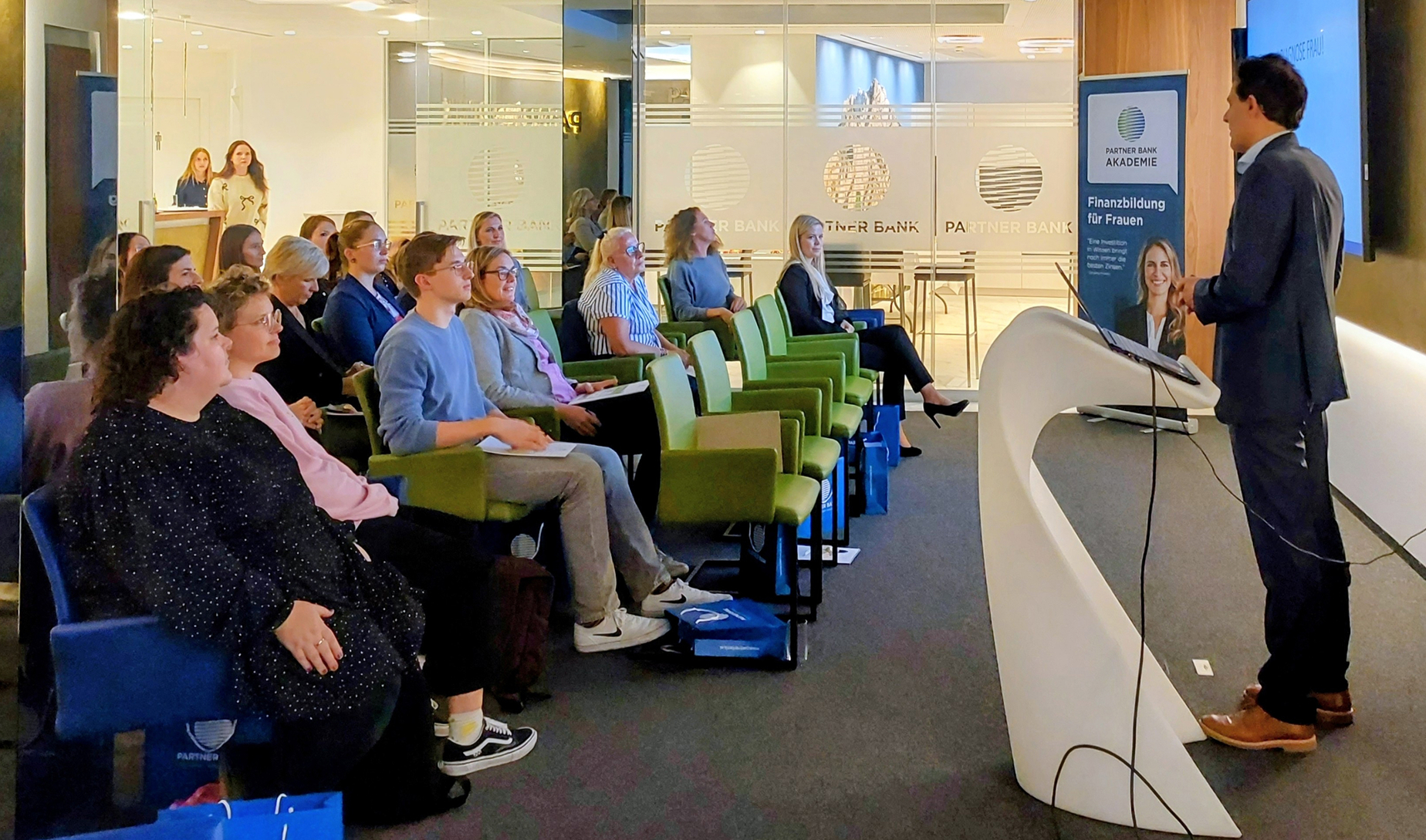
Our webinars cover wealth-building topics in a clear, structured way. Each session focuses on practical themes, such as budgeting, saving, investing basics, and longer-term planning. Examples are used to explain common approaches.
What You’ll Experience:
Practical wealth topics


Our Financial Courses for Women
Our courses offer a flexible way to review wealth-building topics at your own pace. Topics may include saving strategies, investing basics, diversification concepts, and longer-term planning themes.
Strengthen Your Wealth-Building Foundation:
Understand the basics
Our Personal Financial Consultation
In one-on-one consultations, you can discuss your current situation and review general financial planning topics. The conversation can include saving and investing basics, time horizon, risk considerations, and common planning approaches.
Topics We Cover Include:
Your current situation and priorities
Diversification concepts and longer-term planning themes

Additional Partner Bank Offerings and Services for Women

Our Financial Workshops for Women
Workshops cover financial planning topics through examples and exercises, including planning ahead and reviewing common long-term planning themes.
Our Financial Seminars for Women
Seminars explore wealth-building topics in more depth. Topics may include longer-term investing basics, diversification concepts, and planning considerations.

Insights and Inspiration for Women
Our blog offers practical articles related to budgeting, saving, investing basics, and longer-term planning topics.
Get Started with Wealth-Building Topics
You can start by reviewing general information. If you would like, you can request a consultation to discuss general topics and available formats
Do not hesitate to contact us. We are looking forward to hearing from you.
Frequently Asked Questions About Wealth Building for Women
1. What does Wealth Building for Women involve?
It often includes budgeting, saving, investing basics, planning for longer time horizons, and reviewing protection and risk topics.
2. Why do many women invest less than men?
Experiences such as income gaps, career breaks, and caregiving responsibilities can influence exposure to investing topics and how people approach longer-term planning.
3. How can I start building wealth?
Some people start by reviewing income and expenses, setting a goal, and learning basic concepts related to saving and investing.
4. Which investments are often discussed for beginners?
Diversified options such as ETFs and funds are commonly discussed as starting points. What is suitable can depend on the product and provider.
5. What role does uncertainty play in wealth building?
Investing involves risk and markets can fluctuate. Learning basic concepts such as time horizon and diversification can help when comparing approaches.
6. How much money do I need to begin investing?
Some people start with small, regular amounts, depending on the product and provider.
7. How does wealth building relate to long-term planning?
Wealth building is often discussed in the context of longer-term goals such as retirement planning and building reserves. Outcomes vary over time.
8. Is wealth building possible with a limited income?
Approaches can differ, but some people start with structured saving and small, regular contributions.
9. Is it still possible to build wealth later in life?
Approaches can differ depending on time horizon and personal circumstances.
10. Do I need prior financial knowledge?
Many people start with limited background knowledge. Courses, webinars, and written resources can be formats for learning the basics.
11. How does Partner Bank support Wealth Building for Women?
Partner Bank offers consultations and educational formats that cover wealth-building topics and common planning approaches.
Ready to Learn More About Wealth-Building Topics?
If you would like, you can start with general information and explore the available formats.

 | Risk & Legal Notice |
Investments in securities involve risks. The content of this website does not constitute investment advice, a recommendation or an invitation to purchase financial instruments.