

Investments in securities involve risks. The content of this website does not constitute investment advice, a recommendation or an invitation to purchase financial instruments.
Buying Gold Bars, What to Consider
When buying gold bars, size, certification, storage, spread, and resale route all matter. Partner Bank AG can help you review these points before you decide which format may fit your situation.
- Bar size: Small and large bars differ.
- Premiums: Smaller bars can cost more per gram.
- Certification: Quality proof matters.
- Storage: Custody and access should be clear.
Why Gold Bar Size Matters
Gold bars are available in many weights, and the size can affect cost, storage, and resale flexibility.

Small Bars Offer Flexibility
Small bars can be easier to buy in lower amounts and may suit buyers who want more divided holdings. But smaller units often carry higher relative premiums and wider buy-sell spreads.
Larger Bars Can Lower Relative Costs
Larger bars often have lower manufacturing costs per gram. A one-ounce bar or larger format may be more cost-efficient than very small bars, depending on pricing and resale terms.
One Ounce Is Often a Useful Reference Point
A one-ounce bar, about 31.1 grams, is often reviewed because it can balance cost efficiency and practical resale. The right size still depends on budget, storage, and future access needs.
Combibars Can Add Flexibility
Combibars are designed so smaller segments can be separated. They may interest buyers who want divisibility, but costs, resale acceptance, and product terms should still be reviewed.
Gold Bar Sizes and Cost Considerations
Premiums and spreads can differ clearly by bar size. This table is for orientation only, and actual prices can vary by provider, market conditions, and product terms.
| Gold bar size | Typical consideration | What to review |
| 1 g to 10 g | Easier entry, but often higher relative premium. | Premium, spread, packaging, and resale route. |
| 20 g to 50 g | More value per unit, still relatively flexible. | Storage, certification, and later partial sale needs. |
| 1 oz | Common reference size for many buyers. | Price per gram, spread, and resale acceptance. |
| 100 g | Often lower relative premium than small bars. | Budget, storage, and sale flexibility. |
| 250 g to 1 kg | Concentrated value in fewer pieces. | Custody, insurance, and whether partial sale matters. |
| Combibar | Designed for divisibility into smaller units. | Premium, acceptance, and resale conditions. |
Why Premium and Spread Should Be Reviewed
The gold spot price is only one part of the purchase. When buying gold bars, the premium above the gold price and the difference between buying and selling prices can affect the final result. Smaller bars may feel accessible, but they can carry higher relative costs because minting, packaging, and authentication work do not fall in proportion to weight. Larger bars can be more cost-efficient, but may be less flexible if you later want to sell only part of your holding.

What to Check Before Buying Gold Bars
Before you buy, review the points that affect ownership, storage, and resale.
 Check the bar weight and whether it fits your budget.
 Compare the premium above the gold price.
 Ask about the current buy-sell spread.
 Review purity, refinery, and certification.
 Check whether the bar has a serial number.
 Ask how storage and insurance work.
 Review sale, delivery, and payout terms.
 Keep invoices and ownership documents.
Certification, Storage, Access, and Resale
Quality checks, storage, and resale terms matter because buying gold bars is not only a price decision. The bar should be tradable, identifiable, clearly documented, and practical to hold or sell later.
 |
Purity Should Be Stated ClearlyMany investment bars are offered as 999.9 fine gold. Before buying, check the fineness, weight, and manufacturer information shown on the product and documents. |
|
Certification Can Support ResaleA quality certificate can make later verification easier. Good Delivery and LBMA-related standards are often reviewed because they are widely recognised in the gold market. |
 |
Serial Numbers and Packaging MatterSome bars may include serial numbers, especially larger or packaged formats. Tamper-resistant packaging can help protect the bar and certificate, and matching details can support later identification. |
 |
Storage Should Be Planned Before BuyingHome storage gives direct possession, but it also creates responsibility for security and insurance. Vault storage may offer a more structured custody route, depending on the provider. |
 |
Resale Depends on FormatStandard bars from recognised refiners are usually easier to compare and resell than less common formats. Documentation, condition, packaging, and bar size can also affect the process. |
 |
Bar Size Affects FlexibilityA larger bar can reduce relative cost, but it may be less practical if you later want to sell only part of your holding. Smaller units or Combibars may offer more flexibility. |
Review Gold Bars with Partner Bank AG
A short consultation can help you compare gold bar formats, storage routes, ownership records, and next steps before you act. Partner Bank AG offers 999.9 fine gold through one-off purchases or regular buying over time, with Austrian vault storage and access through sale or delivery.
Licensed Austrian Bank
Experience With Physical Gold
Austrian Vault Storage
Clear Online Overview
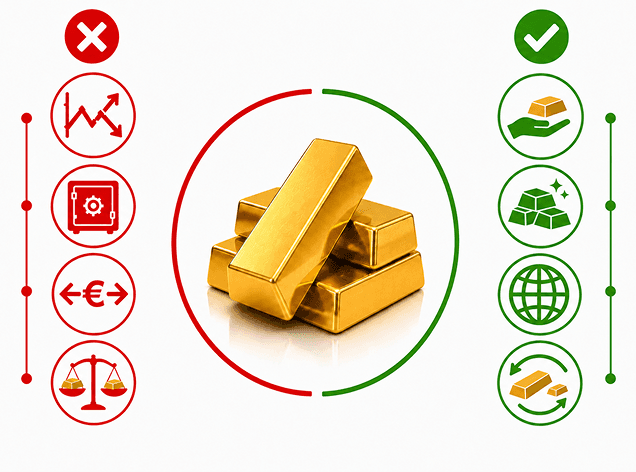
Advantages and Limits of Gold Bars
Gold bars can be practical for some buyers, but they also come with limits that should be reviewed.
- Tangible Ownership: Gold bars are physical assets.
- Compact Value: Larger bars hold value in a small form.
- Market Recognition: Standard bars can be broadly tradable.
- No Income: Gold does not pay interest or dividends.
- Price Risk: Gold prices can rise or fall.
- Storage Need: Security and insurance should be planned.
- Spread Risk: Small bars may have wider buy-sell spreads.
- Format Choice: Bar size affects flexibility and resale.
Frequently Asked Questions
1. What size gold bar should I buy?
There is no single answer. Smaller bars may offer flexibility, while larger bars can have lower relative premiums. Many buyers compare one-ounce, 100 g, and larger bars before deciding.
2. Are small gold bars more expensive?
Often, yes, on a relative basis. Minting, packaging, and authentication costs can make very small bars more expensive per gram than larger bars.
3. Are gold bars cheaper than gold coins?
Gold bars can have lower relative premiums than coins of the same weight, especially in larger sizes. But coins may offer smaller denominations and broader collector or bullion recognition.
4. What is a Combibar?
A Combibar is a divisible gold bar made of smaller connected segments. It may offer flexibility, but you should still review premium, storage, and resale acceptance.
5. Why does certification matter?
Certification helps confirm purity, weight, and manufacturer details. It can also support later resale, especially when the bar comes from a recognised refiner.
6. What should be stamped on a gold bar?
Gold bars usually show manufacturer name, weight, and fineness. Some bars also include serial numbers, especially larger or packaged formats.
7. Does gold pay interest or dividends?
No. Gold does not pay interest or dividends. Any result depends on price movement, costs, spread, and sale conditions.
8. Can I sell only part of a large bar?
Not directly. If you own one large bar, you usually sell that unit as a whole. If partial sale matters, smaller bars or divisible formats may be worth reviewing.
9. Should I store gold bars at home or in a vault?
That depends on your security needs, insurance, access preference, and documentation. Vault storage may provide a structured custody route, while home storage places more responsibility on you.
Related Topics
If you want to compare buying gold bars with other gold routes, these related pages can help you review the wider context.
Request a Consultation
If you are considering buying gold bars, Partner Bank AG can help you compare bar sizes, premiums, certification, Austrian vault storage, ownership documents, delivery, and resale options. A consultation gives you space to ask questions and decide based on your own preferences and circumstances.
 | Risk & Legal Notice |
Investments in securities involve risks. The content of this website does not constitute investment advice, a recommendation or an invitation to purchase financial instruments.